
 Join
Join
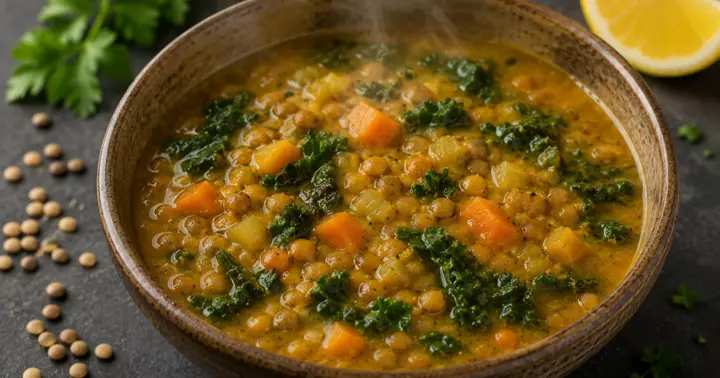
Cozy Anti-Inflammatory Lentil and Kale Soup

Start to Finish: 50 minutes
Servings: 6
Lentils are an excellent source of plant-based protein and fiber, which helps you feel full and supports a balanced diet. Paired with kale and warming spices like turmeric and cumin, this soup follows a Mediterranean-style eating pattern linked to heart health and general well-being. This soup’s soft, blendable texture may make it easier to enjoy on days when speaking or swallowing feels harder than usual, a less-visible symptom of ataxia.
Ingredients
- 1 ½ cups red or green lentils, rinsed
- 1 large yellow onion, finely diced
- 4 garlic cloves, minced
- 3 medium carrots, peeled and diced
- 3 celery stalks, diced
- 2 cups curly kale, stems removed and leaves finely chopped
- 1 can (14.5 ounces) diced tomatoes, no salt added
- 6 cups low-sodium vegetable or chicken broth
- 2 tablespoons extra-virgin olive oil
- 1 ½ teaspoons ground turmeric
- 1 teaspoon ground cumin
- 1 teaspoon smoked paprika
- ½ teaspoon ground coriander
- ¼ teaspoon black pepper
- ½ teaspoon sea salt, or to taste
- Juice of 1 lemon
- Fresh parsley, chopped, for garnish
Instructions
- Rinse the lentils thoroughly under cold running water in a fine-mesh strainer, picking through them to remove any debris or small stones. Set aside to drain. Red lentils will cook into a softer, creamier texture, making them ideal for those who prefer a smoother soup. Green lentils will hold their shape better for a chunkier texture.
- Heat the olive oil in a large, heavy-bottomed pot or Dutch oven over medium heat. Once the oil is shimmering, add the diced onion and cook, stirring occasionally, for 5 to 6 minutes until the onion is soft and translucent.
- Add the minced garlic to the pot and stir continuously for 1 minute until fragrant. Do not allow the garlic to brown, as burnt garlic will make the soup bitter.
- Add the diced carrots and celery to the pot. Stir to combine with the onion and garlic, and cook for 3 to 4 minutes until the vegetables begin to soften slightly.
- Stir in the ground turmeric, ground cumin, smoked paprika, ground coriander, and black pepper. Toast the spices in the oil for 30 to 45 seconds, stirring constantly. Toasting helps release the spices' aromas and gives the soup a deeper, richer taste.
- Pour in the no-salt-added diced tomatoes, including all their liquid, and stir to deglaze the bottom of the pot, scraping up any browned bits. Add the drained lentils and 6 cups of low-sodium broth. Stir to combine.
- Increase the heat to medium-high and bring the soup to a boil. Once boiling, reduce the heat to medium-low, partially cover the pot with a lid (leaving a small gap for steam to escape), and simmer for 25 to 30 minutes, stirring occasionally, until the lentils are completely tender.
- Add the finely chopped kale to the pot and stir to submerge it in the broth. Simmer for an additional 5 minutes until the kale has wilted completely and is tender. Stir in the lemon juice, taste, and adjust salt and seasoning as needed.
- For a creamier, smoother texture suitable for those with swallowing difficulty, use an immersion blender to partially or fully blend the soup directly in the pot until it reaches the desired consistency. Alternatively, carefully transfer portions to a countertop blender in batches. For people whose prescribed texture level calls for a smooth puree, blend fully and adjust the consistency according to guidance from a speech-language pathologist.
- Ladle into bowls and, if appropriate for the individual's prescribed texture level, garnish with fresh chopped parsley. Serve with a drizzle of extra-virgin olive oil, if desired. Always confirm appropriate liquid texture levels with a clinician or speech-language pathologist for individuals with dysphagia.
Nutritional information (per serving, approximately 1 ½ cups): Calories: 260 | Protein: 14 grams | Carbohydrates: 40 grams | Fiber: 12 grams | Fat: 6 grams | Sodium: 290 milligrams
Suitable for: Anti-inflammatory diet, ataxia-friendly diet, dairy-free diet, gluten-free diet, Mediterranean diet, vegan diet, vegetarian diet
References

Looking for delicious, healthy recipes? Find your next meal here.
 Your Privacy Choices