
 Join
Join
Physical Therapy for Ataxia: 9 Ways It Can Help


Key Takeaways
- Physical therapy can play an important role in helping people with ataxia move more safely, build strength, and maintain independence in their daily lives. View all takeaways
Ataxia can change a lot about how you move and get around. If you have specific movements that are hard to master, your doctor may have already recommended working with a physical therapist.
Let’s go over the ways physical therapy can help you with your ataxia.
How Does Physical Therapy Help Ataxia?
Physical therapy (PT) may be useful for people with movement disorders. Since ataxia is a movement disorder and physical therapists are movement experts, the two pair well.
What Is Ataxia?
Ataxia occurs when part of the brain, called the cerebellum, is damaged. The damage can be due to a hereditary condition, such as a spinocerebellar ataxia or Friedreich ataxia. It can also be acquired, such as through an autoimmune disease, infection, stroke, or conditions such as multiple sclerosis or cerebral palsy.
Since the cerebellum controls muscle coordination, damage to the cerebellum affects muscle coordination. Ataxia can show up as difficulty with walking, balance, hand and limb movements, swallowing, speaking, and eye movements.
What Is Physical Therapy?
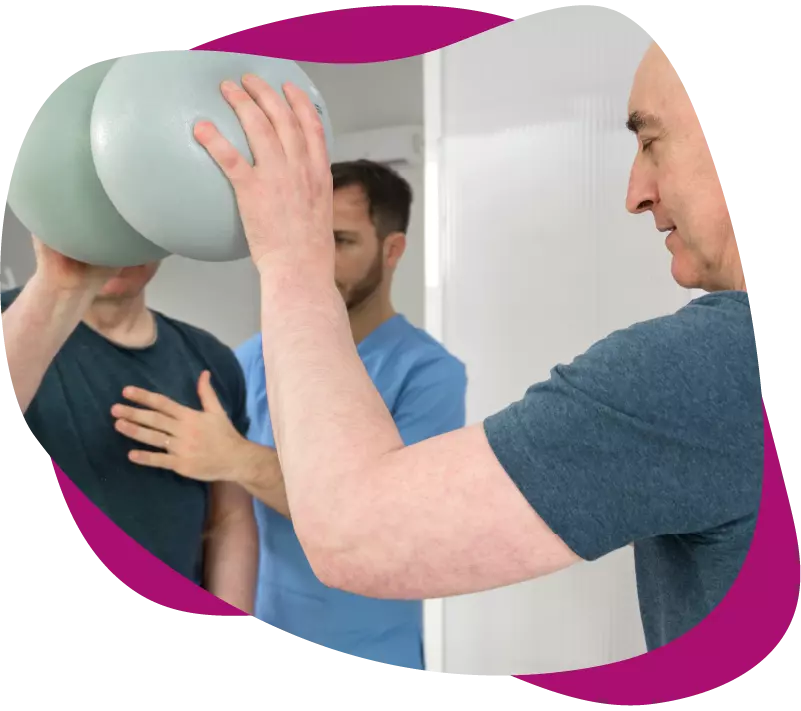 Physical therapy is a type of rehabilitation that focuses on helping people move better, more comfortably, more safely, and with more strength. Physical therapists are healthcare professionals with expert knowledge of how the body works and what to work on when your body isn’t functioning well. They help assess your level of function and how well you’re able to move and then come up with a plan to help improve your movement and strength.
PT sessions typically include some hands-on treatment for sore, stiff areas that aren’t moving well, targeted drills to help you work on specific movement patterns, and therapeutic exercises to improve motion and strength. You may work on some of these while with the physical therapist, and you may take some on at home.
Physical Therapy Interventions for Ataxia
There are many ways physical therapy can be helpful for people with ataxia. Working on muscle function and coordination can help people move around more safely and increase their independence in daily living.
Your physical therapy plan will be individualized based on your specific symptoms. It depends on the type of ataxia you have, how severe it is, and how it’s progressing. Your therapist will be able to adapt sessions to best fit your current level of function and your goals.
Building Your Strength
One key aspect of physical therapy is improving your muscles’ capacity for everyday activities. Strength building is a big part of this.
Strength training will help reduce muscle fatigue that’s common with ataxia. It can help make movements like picking up grocery bags or getting out of a chair easier.
Physical therapists help you build strength through specific exercises, including body weight exercises such as standing marches, sit to stand exercises, or resistance exercises using resistance bands or free weights.
It’s important to do exercises that challenge your muscles so they can grow stronger, but aren’t so difficult that they can cause pain or muscle damage or keep you from participating safely. Your PT will pick the best exercises based on your current level of muscle function and tasks that are challenging for you.
Improving Your Flexibility
Muscle tightness, joint contractures, and scoliosis are all common with ataxia. As you begin to have difficulty moving, you may naturally move less, which can cause tightness. Physical therapists can help work on tight muscles and joints.
The physical therapist may perform some stretches for you while you’re in a session. They may also show you other stretches that you can work on at home. Having flexible joints and muscles can make balance, walking, and general movement easier and more comfortable.
Refining Your Balance
Balance becomes challenging with ataxia for a few reasons. Ataxia can cause a loss of proprioception, or knowing where your body is in space, which makes it hard to balance.
Ataxia can also cause a loss of sensation, so it can be harder to feel the surface under your feet. Muscle weakness makes it hard for your body to correct quickly when you start to lose your balance as well.
In PT, you’ll work on balance training exercises that challenge your balance so your body can learn to adapt to the changes happening. To improve your balance systems, you may perform drills like weight shifting or standing and walking on uneven or soft surfaces to learn the edges of your base of support. These balance exercises may also be referred to as vestibular training.
Sharpening Your Coordination
You might notice that when you try to reach for something, your hand doesn’t end up where you want it to go on your first try. This lack of coordination in your limbs is also common with ataxia.
In PT, coordination drills typically involve some sort of target. Reaching for a target helps your limbs relearn where they are and how to get to a desired object. Coordination drills can also be important for balance to make sure your feet land where you intend for them to go.
Fitting and Training You on Assistive Devices
As getting around becomes more difficult, it may be helpful to get an assistive device. Assistive devices are items that help you move more safely, like walkers, crutches, canes, and wheelchairs.
Physical therapists are trained to help recommend assistive devices and fit you for them. Once you get an assistive device, your physical therapist can also help train you to make sure you’re using it safely and effectively.
Educating You on Lifestyle Adjustments
Physical therapy sessions include lots of education. Some education is for you, and some might also be for your family and support system so they know how to best help.
This education may include talking about your condition and how it affects your body, what you can expect to get out of physical therapy, and what changes to make to ensure your safety. They’ll likely discuss your home environment and make recommendations, such as adding railings and grab bars for safety. For instance, they may suggest removing loose throw rugs that are easy to trip over.
Improving Your Gait
Gait training is a specific type of exercise to help improve your walking ability. A lot of these exercises are done in session initially, so your physical therapist can assess how you respond and how safe you are. If there are drills that are safe for you to work on at home, they’ll recommend them.
One common example of something you may work on with your physical therapist is foot clearance and step height. As walking becomes harder with ataxia, people tend to drag and shuffle their feet while walking, which can easily lead to falls. Working to pick up your feet when you walk can help reduce fall and injury risk.
Strengthening Your Eye Muscles
If ataxia has affected your eye control, your physical therapist can work on drills to improve eye movement and coordination. This involves practicing certain eye movements to strengthen those muscles.
Boosting Your Overall Health
Physical therapy involves exercise. Physical activity can improve mood, energy, heart and lung health, and sleep, as well as help you achieve and maintain a healthy weight. It can also reduce your risk of other chronic health conditions, such as type 2 diabetes and high blood pressure.
Regular movement is important for everyone but especially for people with ataxia who have a more challenging time moving. Physical therapists can help you find safe and effective forms of exercise to keep you healthy. They may recommend some type of cardiovascular exercise for even more health benefits.
Finding a Physical Therapist
Talking with your doctor can be a good place to start to get a referral for physical therapy. They might be able to recommend some providers in your area.
Since ataxia is a neurological disorder, you’ll want to search for a physical therapist who’s trained in neurorehabilitation, maybe even specifically with ataxia. When you call to schedule an appointment, you can ask if they specialize in neurorehabilitation to make sure you end up with a physical therapist who will be a good fit.
Physical therapy can be a long-term part of your ataxia management. There may be times when you’re working directly with a physical therapist and times when you’re working on your own with a home exercise program. It’s important to stay consistent with the exercises they give you to get the most benefit from them.
If you have any specific questions about treatments for ataxia or how physical therapy can help, contact your medical team.
Join the Conversation
On MyAtaxiaTeam, people share their experiences with ataxia, get advice, and find support from others who understand.
Have you experienced help from a physical therapist to help manage your ataxia? Let others know in the comments below.
Related
- What is Friedreich's ataxia and how is it different from other types? See answer
- Can ataxia affect your vision or eye movements? See answer
- What complications can come from ataxia? See answer
- What tests are used for ataxia and what do they show? See answer







 Your Privacy Choices